Grease Interceptor Cleaning
Grease interceptors are large in-ground tanks, usually 500 gallons or more, that serve high-volume kitchens. After pumping, hardened grease often remains stuck to the walls, baffles and outlet. Cleaning uses scraping and high-pressure water to remove it so the tank can separate grease properly again.
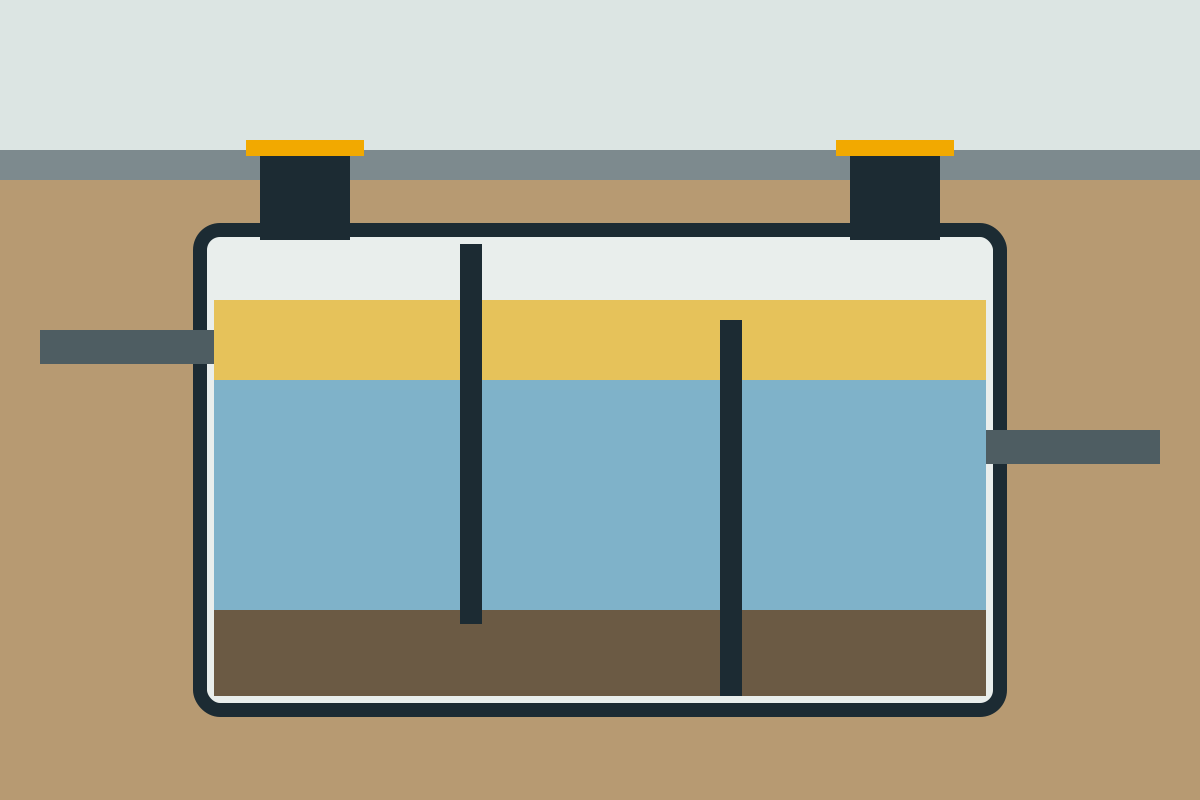
Inspection while the tank is open
An empty interceptor is the best chance to check its condition. Concrete can be eaten away by hydrogen sulfide, baffles and outlet tees can crack or fall off, and lids and risers can shift. Each problem lets grease reach the sewer, so they are worth catching early.
Sample ports and access
Inspectors often draw a sample from a port near the outlet to check what is leaving the tank. Keeping that port clear and the lids accessible makes inspections faster and shows the interceptor is being looked after.
Cities we serve
This service is available in Houston and each of these nearby cities:
Common questions
How is an interceptor different from a grease trap?
An interceptor is a larger tank, usually buried outside, that handles more flow than a small indoor trap. It needs a vacuum truck to service.
What damages a grease interceptor over time?
Hydrogen sulfide gas corrodes concrete and metal, while heavy traffic and shifting soil can crack lids and risers.
Why do baffles matter so much?
Baffles slow the water down so grease can float and solids can sink. A broken baffle lets grease flow straight out of the tank.
Should an interceptor be inspected every visit?
A quick look at the walls, baffles and outlet during each service is good practice, because problems are easiest to spot when the tank is empty.